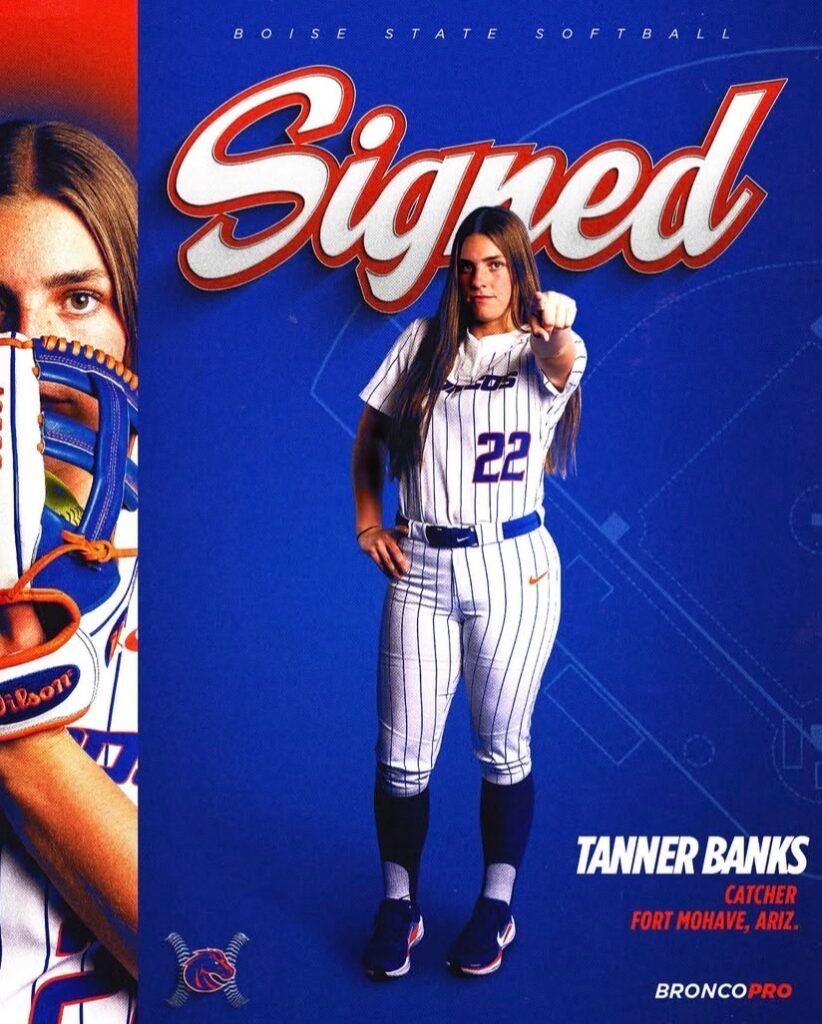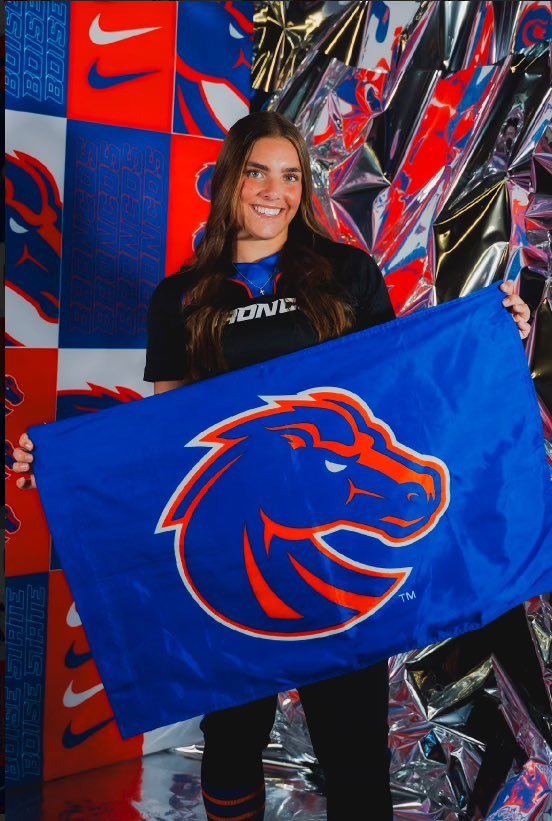
Built for the Moment: Tanner Banks the Power Surge Boise State Needs
May 5, 2026
Article By Nick Wade
The next era of Boise State Broncos softball will not be defined by continuity. It can’t be. Not after an offseason that stripped away nearly three-quarters of the program’s offensive power between 2025 and 2026, and not as the university prepares to step onto a larger stage in the reimagined PAC-12 Conference. Programs rarely get the luxury of rebuilding slowly when the spotlight grows brighter. They either reload with purpose or risk fading into irrelevance.
For Boise State, the blueprint is already forming – and it begins with hitters who don’t just survive pressure, but seek it. Players who don’t just contribute, but change games in a single swing. In Tanner Banks, the Broncos may have found exactly that.
She doesn’t speak in clichés about trusting the process or letting the game come to her. Her mindset is simpler, sharper, and far more revealing.
“I approach each at-bat looking to do damage.”
It’s not bravado. It’s statistical reality.
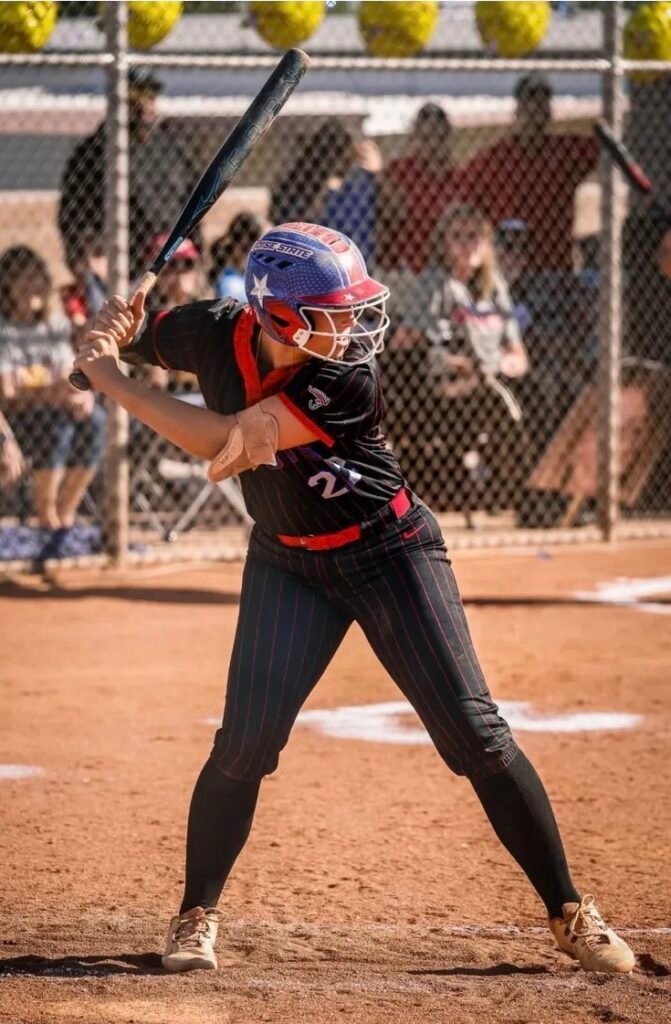
A Statistical Outlier in a Game Built on Margins
Softball, at its highest levels, is a sport defined by inches and milliseconds. A pitch elevated just enough, a swing timed just right, a defensive read made a fraction earlier – those are the differences between routine outs and highlight-reel moments. Sustained dominance, especially at the plate, is rare.
What Banks has done at the high school level borders on absurd.
A .738 batting average. A .745 on-base percentage. A 1.488 slugging percentage. Sixty-two hits. sixty runs scored. Seventy-nine runs driven in. Twenty-one home runs. Eighteen doubles. Two triples. Eleven stolen bases. A 1.000 fielding percentage behind the plate. Shattering state records with 70 home runs and 300 runs batted in for her career.
Numbers like that don’t simply lead a team; they redefine expectations. They force opposing coaches to alter game plans, pitchers to nibble at the edges, and defenses to play on edge from the first pitch to the last.
And yet, when asked what stands out most, Banks doesn’t point to the average or the home runs. She focuses on the runs driven in.
That answer says more than any stat line ever could.
Run production is the currency of winning softball. It’s situational. It’s pressure-packed. It’s often dependent on executing in moments when failure feels inevitable. Banks doesn’t just collect hits; she converts opportunities. That distinction matters -especially for a Boise State team that must replace lost offensive firepower immediately.
The Making of a Competitor
Banks traces the moment softball became more than just a game to the summer after eighth grade. It wasn’t a single swing or a defining tournament. It was a realization – one that came as competition intensified and expectations grew.
Her freshman season confirmed it. Facing better pitching, stronger defenses, and faster gameplay didn’t expose her. It elevated her.
That early exposure to higher-level competition didn’t just sharpen her mechanics; it hardened her mindset.
A multi-sport athlete, Banks credits basketball and volleyball with shaping the way she approaches pressure. Basketball taught her aggression and composure in chaos – the ability to process rapidly and react decisively. Volleyball, perhaps more subtly, taught her resilience. One mistake, one misread, one lapse in focus can cost a point instantly. There’s no time to dwell.
That translates directly to softball.
Errors happen. Strikeouts happen. Even elite hitters fail more often than they succeed. The separation comes in the response.
Banks resets.
A Swing Built on Simplicity - and Relentless Repetition
For all the complexity surrounding elite hitting – spin recognition, launch angles, pitch sequencing—Banks reduces her approach to something almost disarmingly simple: be on time and barrel the ball.
It’s the kind of answer that might sound elementary until you consider how difficult it is to execute consistently, especially against pitchers actively trying to disrupt timing and exploit tendencies.
Her power doesn’t come from guessing. It doesn’t come from selling out for home runs. It comes from repetition and physical preparation – thousands of swings, countless hours refining muscle memory, and a commitment to strength training that allows her mechanics to translate into impact.
“I’m thinking line drive all the time,” she says.
That philosophy explains everything. Line drives become extra-base hits when struck with authority. They become home runs when elevation meets exit velocity. By refusing to chase power artificially, Banks allows it to emerge naturally.
The result is a hitter who can do both – hit for average and for power—without compromising either.
The Art of Adjusting When Everyone Knows Your Name
Dominance invites attention. Attention invites strategy.
Pitchers at the high school level – and increasingly at elite travel circuits – aren’t approaching Banks the same way they approach other hitters. They’re cautious. They’re deliberate. They’re often unwilling to challenge her directly.
Banks has adapted.
She remains aggressive, but patient within that aggression. She waits for mistakes rather than forcing action. It’s a nuanced shift, one that separates good hitters from elite ones.
There’s a discipline required to resist expanding the zone when pitchers refuse to give in. There’s confidence required to believe that eventually, an opportunity will come.
Banks doesn’t chase the game. She lets it come to her – and when it does, she doesn’t miss.
The Moment That Defines a Player
Every elite competitor has a moment – the kind that crystallizes who they are under pressure.
For Banks, it came in the simplest, most unforgiving scenario imaginable: down by one, last inning, two outs, runner on third.
No margin for error.
She worked the count to two strikes. The pitcher came inside with a rise ball, letters high – a pitch designed to induce weak contact or a swing-and-miss.
Banks turned on it.
Game over.
The physical execution was impressive. The mental state was more revealing. She describes a feeling of calm intensity – no nerves, just a heightened awareness, a sense that the moment belonged to her before the swing ever happened.
That’s not something that can be coached. It’s something that’s cultivated over years of competing, failing, adjusting, and succeeding.
It’s also exactly what Boise State will need.
Commanding the Game from Behind the Plate
While her offensive production draws headlines, Banks’ defensive identity may be just as important to her long-term impact.
Catching is the most demanding position on the field. It requires physical endurance, mental acuity, leadership, and the ability to process information constantly.
Banks embraces all of it.
She sees the field differently from behind the plate. She communicates with her infield before every pitch, ensuring alignment and awareness. She studies hitters – foot positioning, hand movement, bat speed—looking for patterns and vulnerabilities.
Game-calling, for her, is not reactive. It’s proactive.
She’s not waiting to see what happens. She’s anticipating it.
And then there’s the run game.
“Home plate is my plate,” she says.
It’s a statement rooted in pride. Controlling base runners isn’t just about arm strength; it’s about presence. It’s about making opposing teams think twice before taking extra bases. It’s about eliminating easy opportunities and forcing opponents to earn everything.
For a Boise State program entering a more competitive conference, that kind of defensive control will be invaluable.
Leadership Without Noise
Ask Banks how she wants to be described, and her answer isn’t centered on stats or accolades.
A good teammate. Always smiling. Competitive.
It’s a balance that defines effective leadership – approachability paired with intensity. She doesn’t separate performance from personality. She integrates them.
Her leadership has evolved over time, shifting from internal accountability to influencing those around her. She leads by example, but she’s also willing to hold teammates to a standard.
That standard, she notes, is a cornerstone of her current program’s success. Senior players hold younger ones accountable. Respect remains constant, regardless of what happens off the field.
It’s a culture Boise State is actively rebuilding.
Why Boise State - and Why Now
For Banks, the decision to commit to Boise State wasn’t transactional. It was personal.
The environment felt familiar – reminiscent of her hometown. The atmosphere resonated. The vision of the program aligned with her own ambitions.
There was also a relationship component. Her connection with Coach Tegan began before Boise State, dating back to earlier interactions when Tegan was at Oregon. That continuity matters in recruiting. Trust isn’t built overnight.
Her impressions of head coach Justin Shults and the rest of the staff reinforce that foundation. Open communication. Positive energy. A sense of direction.
For a program undergoing transition – new staff dynamics, roster turnover, conference realignment – those elements are critical.
Banks isn’t just joining a team. She’s joining a rebuild.
And she wants to grow with it.
Replacing What Was Lost
The reality facing Boise State is stark. Losing 75 percent of a team’s offensive power in a single offseason isn’t a minor setback. It’s a structural reset.
Power, in softball, isn’t easily replaced. It requires a specific combination of mechanics, strength, timing, and mentality. It’s also contagious. Lineups built around power force pitchers into difficult decisions, creating opportunities for everyone.
Without it, teams become easier to manage. More predictable. More reliant on sequencing rather than impact.
Banks represents a shift back toward impact.
Her ability to produce runs, hit for both average and power, and maintain consistency across multiple seasons makes her more than a promising recruit. She’s a potential cornerstone.
And she’s not alone. Boise State’s recruiting strategy reflects a broader emphasis on offensive firepower—players capable of altering games quickly and consistently.
That approach isn’t optional as the Broncos prepare for the PAC-12. It’s essential.
The Mental Framework of an Elite Competitor
Banks’ mindset is perhaps her most transferable skill.
“I am competing against myself every day to become better.”
It’s a philosophy rooted in internal accountability rather than external validation. Success isn’t defined by comparison. It’s defined by progression.
Her approach to pressure is equally telling.
“Pressure isn’t there unless you put it there.”
It’s a reframing that removes the weight from high-stakes situations. Instead of viewing moments as overwhelming, she treats them as opportunities – no bigger or smaller than any other.
Failure, when it comes, is processed quickly.
Move on. Focus on the next play.
In a sport where even the best hitters fail frequently, that ability is invaluable.
Life Beyond the Field
Away from softball, Banks’ world is grounded in simplicity and connection.
She spends time with family and friends, enjoys the river near her home in Fort Mohave, and embraces outdoor activities like camping and riding. There’s a balance to her life – one that allows her to reset mentally and physically.
She bakes. She watches television. She plays pickleball.
Before games, her playlist leans toward rap and house music – genres that match her on-field energy.
These details matter. They humanize a player whose on-field production can feel almost unreal. They also provide insight into how she maintains consistency. Elite performance isn’t sustained through intensity alone; it requires recovery, perspective, and balance.
The Future Arrives Early
Banks’ early goals at Boise State are pragmatic. Find a role. Compete. Let the stats follow.
It’s a grounded approach, but it shouldn’t be mistaken for a lack of ambition. Players with her production history don’t arrive quietly. They create competition immediately, raising the standard in practice and games alike.
For Boise State, that internal competition is part of the rebuild. Depth matters. Versatility matters. The ability to plug impact players into multiple roles matters.
Banks has already expressed willingness to contribute at any position if it helps the team win. That flexibility, combined with her primary role as a catcher, increases her value.
A Program at a Crossroads
Transition periods in college athletics are often framed as challenges. For Boise State softball, this one is also an opportunity after falling short of making the postseason in 2026 in its first year of rebuild.
A new conference. A restructured roster. An evolving identity.
Programs can cling to what was or embrace what’s next. The Broncos appear to be choosing the latter, prioritizing offensive explosiveness and competitive resilience.
Players like Tanner Banks embody that shift.
She doesn’t just fit the system Boise State is building. She helps define it.
The Power of What Comes Next
There’s a tendency to view recruiting classes as future investments – players who will develop over time, gradually contributing as they adjust to the collegiate level.
Banks complicates that narrative.
Her production suggests readiness. Her mindset suggests adaptability. Her presence suggests impact.
As Boise State steps into the PAC-12, the margin for error will shrink. Pitching will be deeper. Lineups will be stronger. Every weakness will be tested.
In that environment, power matters more than ever.
So does confidence. So does composure. So does the ability to deliver when the game is on the line.
Banks has already shown she can do all of it.
The next chapter will test her in new ways. It will challenge her consistency, her adjustments, and her endurance.
But if her past is any indication, she won’t wait for the moment.
She’ll create it.